Comprehensive Eye Exams

Eye exams that focus on you.

  • Full 45-minute medical eye health evaluations, never rushed.
  • Independent optometrists fine-tuning prescriptions for your specific needs, not insurance metrics.
  • Screening for glaucoma, macular degeneration, cataracts, and systemic health conditions.
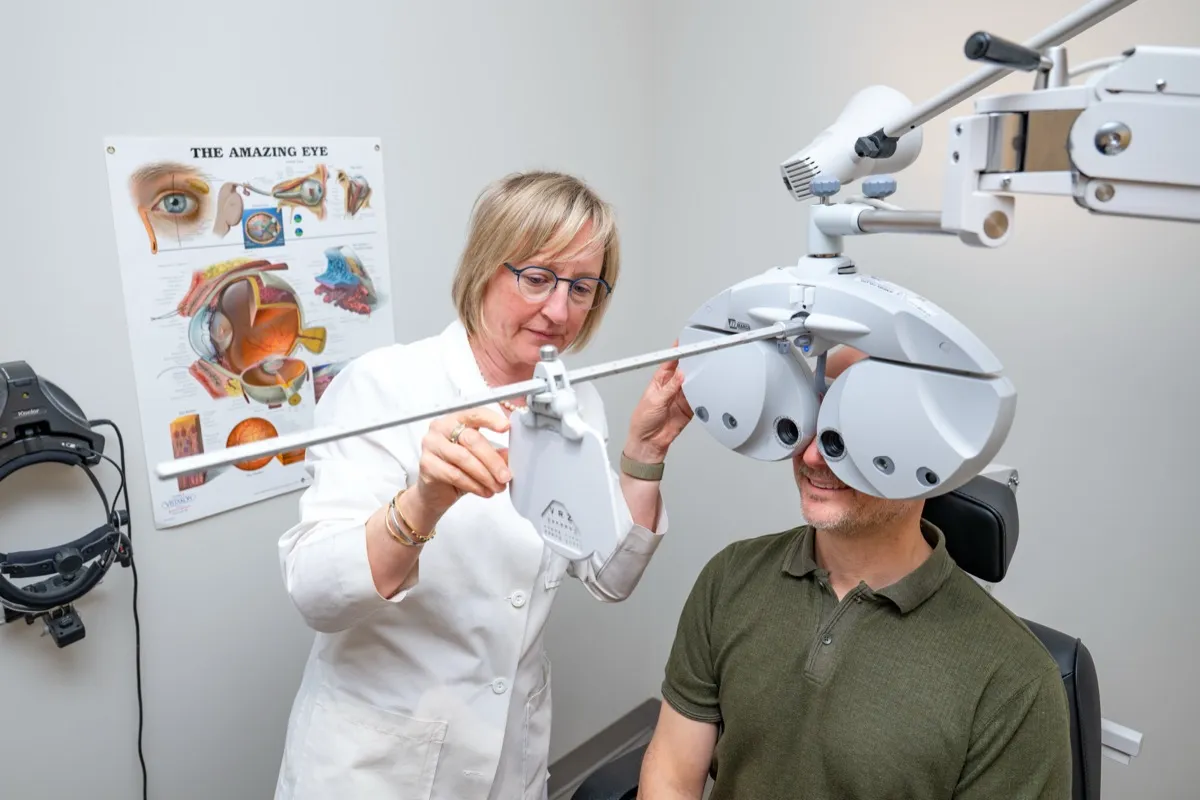
A Voorthuis optometrist measuring a patient's prescription with a digital phoropter during a comprehensive eye exam.
From our patients
Best eye exam I’ve ever had in my life with Dr. Robinson. I’ve historically always seen ophthalmologists, but my primary vision concern has been reading difficulty. Dr. Robinson and the team at Voorthuis on Conn Ave are total pros.
Jimmy R.Connecticut Avenue
Best of Bethesda award
Best place to buy eyeglassesEvery year since 2018!
8Neighborhood locations
53Years serving the DMV
35+High-end designs
The Voorthuis exam advantage

Care that takes its time.

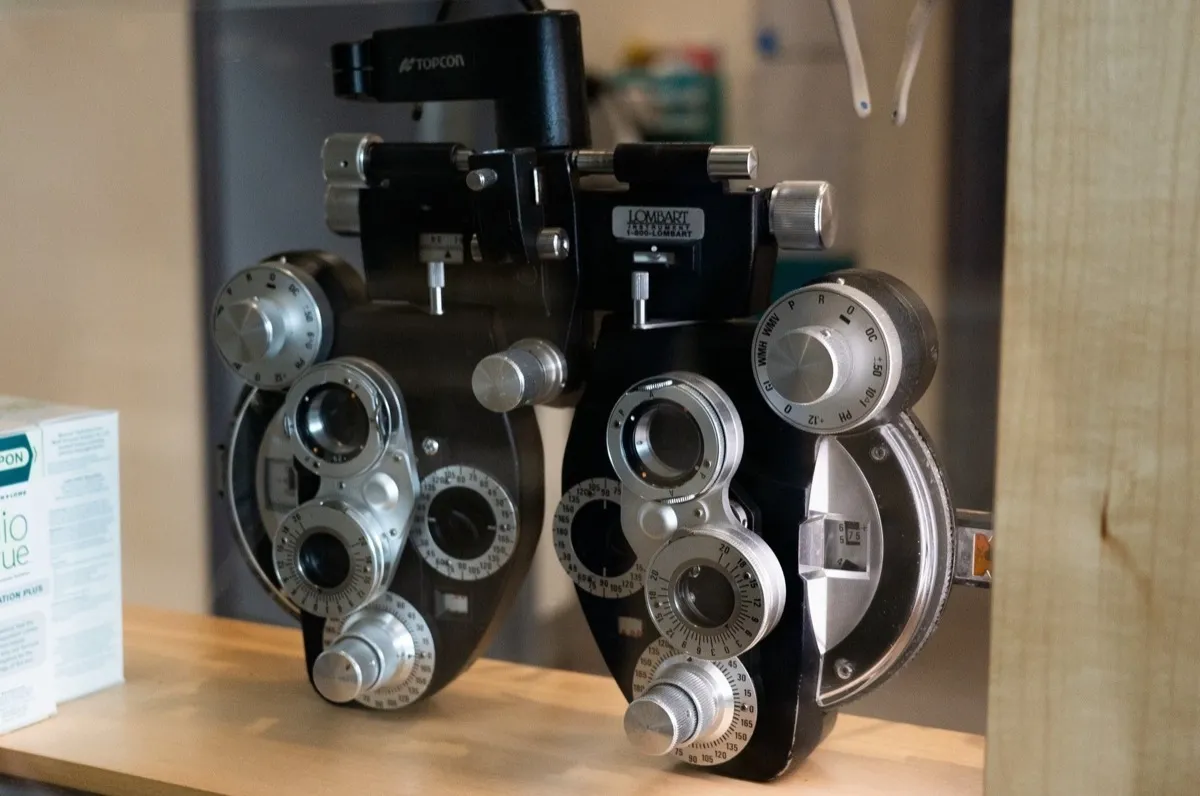
Two phoropters on display in a Voorthuis exam-room cabinet
i.

45 Minutes of Dedicated Care

Our doctors spend the full appointment directly with you. That is the time it takes for an accurate prescription and a thorough medical evaluation, start to finish in one room.

ii.

Clinical Independence

Because we operate independently and do not participate in restrictive vision insurance panels, our doctors are completely free to write prescriptions and recommend solutions based entirely on your eye health needs, not what insurance approves.

iii.

Precision With Complex Prescriptions

Severe astigmatism, large prism corrections, a contact-lens fit that never sat right: these take careful measurement, patience, and the willingness to refine until the result holds. We take that time, and our reviews speak to where it leads.

What is included in your evaluation

What the doctor actually checks.

01.

Visual Acuity & Refraction

Using the phoropter (the lens dial you look through), we measure your absolute sharpest prescription for distance, reading, screen use, & any other specific activities, such as music, golfing, needlepoint, shooting, or archery. The result is glasses tuned to your eyes and their specific needs.

02.

Ocular Health Screening

A direct look through the slit lamp paired with retinal imaging screens for eye conditions such as dry eye, corneal dystrophies, cataracts, macular degeneration, glaucoma, and other retinal pathology. Our goal is to find the changes that happen silently, educate, and establish a care plan.

03.

Glaucoma & Pressure Testing

We measure intraocular pressure (the fluid pressure inside the eye) and check the optic nerve. High pressure is one of the main risk factors for glaucoma, and catching it early is the difference between a simple eyedrop and permanent vision loss.

04.

Lifestyle Consultation

A real conversation about your day (office screens, the commute, weekends outdoors) so any lens recommendation fits how you actually use your eyes rather than a generic prescription.

A complete guide

What an unhurried exam actually does.

A comprehensive eye exam is a full medical evaluation that goes well beyond a quick chart reading. Here is what each part checks, and why it matters for more than your glasses.

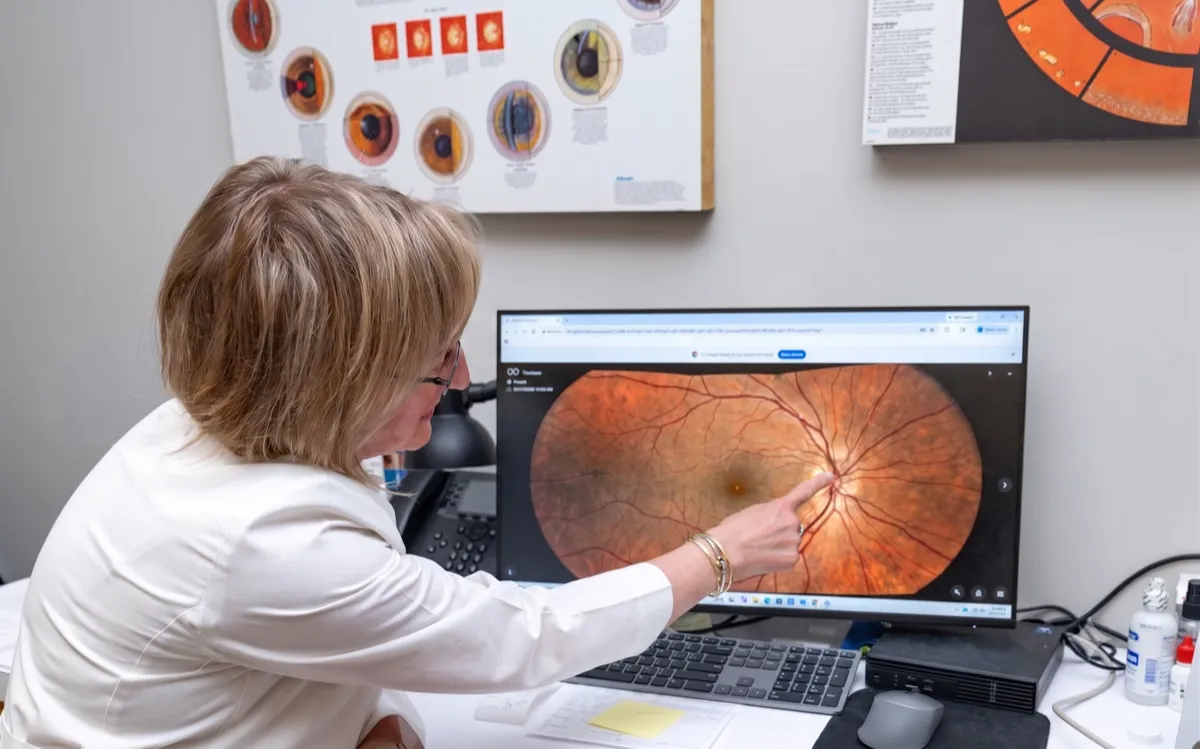
A Voorthuis optometrist reviewing a patient's retinal image on a monitor during an eye exam

It starts with your sharpest prescription

Refraction is the part most people picture: looking through the phoropter while the doctor compares lenses. Done unhurriedly, it lands on the exact correction for your eyes - including nuances in astigmatism, comfort, and the subtle differences between your two eyes that an auto-refraction cannot measure. The payoff is glasses that feel right on day one instead of "close enough."

Then it looks inside the eye

The more important half of the exam is medical. Your optometrist examines the cornea, lens, retina, and optic nerve. This is how we catch cataracts forming, spot the earliest signs of macular degeneration, and find retinal changes. Many of these conditions go unnoticed for years until they are advanced, which is exactly why an annual look matters.

It screens for glaucoma

We measure intraocular pressure (the fluid pressure inside the eye) and assess the optic nerve and your visual field (your full range of peripheral vision). Elevated pressure is the leading risk factor for glaucoma, a disease that quietly affects peripheral vision and contrast. Catching glaucoma early, before a patient has symptoms, is essential to successful management outcomes.

And it watches your overall health

The eye is the one place a doctor can see your blood vessels and nerves directly, without an invasive procedure. Diabetes shows up as diabetic retinopathy; high blood pressure leaves its mark on the retinal vessels; even some neurological conditions surface here first. A thorough exam is a window to your systemic health, not just your vision.

Ask about Neurolens. Many people live with headaches, eye strain, neck pain, and motion sickness and never connect it to their eyes. Neurolens measures the small misalignment between your eyes that screen time makes worse, then corrects it with contoured prism, a lens that eases those symptoms for many of the patients who try it. It is the kind of measurement most optical shops do not offer.
A patient story

The first time someone enjoyed going to an optician.

Anne came to our Foxhall Square store in DC for a comprehensive exam. "This is the first time I've actually enjoyed going to an optician," she wrote afterward. Dr. Rebecca Voorthuis was, in her words, "prompt and thorough," and clearly explained her current vision status rather than handing over a slip and moving on.

Instead of reaching for a standard prescription, Dr. Voorthuis asked several questions about how Anne spends her day, then suggested the lens options that would work best for her. Anna-marie Voorthuis handled the lens and frame fitting, attentive and precise, "augmented," Anne said, "by a delightful conversation."

"So easy too," she added. "They're right in the neighborhood with accessible parking."

Anne D. · Foxhall Square, Washington DC
What to expect

From check-in to clarity.

What actually happens when you come in for a comprehensive exam. Plan for about an hour door to door, the bulk of it directly with your doctor.

  1. 01

    Check-in & history

    We review your medical history, current medications, family eye-health history, and any symptoms. That context tells the doctor where to look closely. You see the same doctor year after year, and someone who knows your history notices change a stranger would miss.

  2. 02

    Pre-testing

    Quick, painless baseline readings (autorefraction and intraocular pressure) so your time with the doctor is spent on judgment, not data entry.

  3. 03

    The unhurried doctor exam

    Your optometrist examines the front and back of the eye, tests how your eyes work together, and screens for glaucoma, cataracts, macular degeneration, and the systemic conditions that surface in the eye.

  4. 04

    Refraction & lifestyle consult

    We fine-tune your exact prescription, then talk through how you spend your day to match it to the right lenses, without rushing you or pushing extras.

  5. 05

    Recommendations & frames

    You leave knowing your eye health and your options. If you want eyewear, an optician walks you through frames that suit your face and prescription. If you don't, there's no pressure.

Cost & insurance

Transparent pricing, worth the time.

Voorthuis does not bill vision insurance panels, and we are direct about why. Those panels set short appointment windows and steer doctors toward a limited product list. Stepping outside them is exactly what lets our optometrists give you that unhurried time and a prescription chosen for your eyes alone. The value you feel is the time itself.

The exam is a single, transparent fee, quoted before you book, with no bundled add-ons and no surprise line items. To put it in context, see our guide on eye exam cost without insurance in DC and why we skip vision insurance in the first place.

We accept FSA and HSA for your exam, take all major credit cards, and provide a fully itemized medical invoice you can submit to your plan for out-of-network reimbursement. Many patients are reimbursed for a meaningful share of the visit.

In their own words

What patients say about their exam.

I went in for a slight eye infection and was seen by Dr. Figler. He was extremely knowledgeable, performed a thorough examination, identified the underlying issue, and gave me an effective long-term plan for my extremely dry eyes. No other eye doctor had ever identified the actual problem.
Alena M. · Old Town Alexandria
Top-notch exam with Dr. Rebecca Voorthuis. I have a difficult prescription and a sensitivity to vision changes that seems to elude some eye doctors. Her exam was very thorough, and she was candid and quick, although never rushed.
Tracy B. · Foxhall Square
Dr. Trang Le was extremely knowledgeable and thorough with my eye exam. She was patient and did not rush, even though I was her last patient and near closing time. I see why they have 5-star ratings.
Michele C. · Wildwood
Frequently asked

Eye exam questions, plainly answered.

How much time should I plan for my eye exam?
Please block out approximately one hour total for your appointment. Most of that is your direct time with the optometrist, with the remainder for check-in and browsing our curated frame collections.
Do you accept vision insurance for eye exams?
We do not bill vision insurance panels directly. This policy preserves our clinical independence and ensures our doctors can spend three times longer with you than a chain store allows. We will provide you with a fully itemized medical invoice that you can easily submit to your provider for out-of-network reimbursement.
How often should I have my eyes examined?
For most adults, we recommend a comprehensive eye health exam once every year. Regular annual exams are critical not just for updating your prescription, but for tracking structural changes in the eye that occur without early symptoms.
What's the difference between a comprehensive eye exam and a vision screening?
A vision screening (the kind done at school or a license renewal) only checks how well you read a chart. A comprehensive eye exam is a full medical evaluation: we measure your exact prescription, then examine the internal structures of the eye for early signs of glaucoma, cataracts, and macular degeneration, along with systemic conditions like diabetes and high blood pressure that show up in the eye first. A screening tells you that you might need glasses; a comprehensive exam protects your long-term eye health.
What does a comprehensive eye exam include?
Your time with the optometrist covers visual acuity and refraction to pin down your sharpest prescription, binocular vision and eye-movement testing, intraocular pressure measurement (the glaucoma check), and a detailed look at the retina and optic nerve at the back of the eye. We finish with a lifestyle conversation, so any lens recommendation fits how you actually use your eyes, whether at a screen, behind the wheel, or outdoors.
Will my eyes be dilated during the exam?
Not at every visit. For a healthy adult coming in for a routine exam, we can usually examine the back of the eye with wide-field retinal imaging and skip the drops. We dilate when there is a specific reason to look more closely, such as a strong prescription, a condition like diabetes or high blood pressure, a family history of glaucoma or macular degeneration, or new symptoms such as floaters or flashes of light. In those cases the drops widen the pupil so we can see the retina and optic nerve fully. That is the most reliable way to catch diabetic retinopathy, retinal tears, and macular changes early. If we do dilate, the effect lasts a few hours and makes bright light and close-up focus temporarily harder, so it is worth bringing sunglasses and arranging not to drive right afterward. We will always tell you beforehand so you can plan your day.
What's the difference between an optometrist, an ophthalmologist, and an optician?
An optometrist (OD) examines your eyes, prescribes glasses and contacts, and screens for and manages eye disease. This is who you see for an annual exam, and every Voorthuis location has one on site. An ophthalmologist (MD) is a medical doctor who also performs eye surgery; we refer you to one if your eyes ever need surgical care. An optician fits and crafts your lenses and frames from the prescription. For routine eye exams and eyewear, an optometrist is who you need.
At what age should my child have their first eye exam?
It comes down to readiness more than a birthday. A comprehensive exam works best once your child can follow simple directions and sit through the testing (reading a chart, answering which view looks clearer), which for most children lands around age four or five. That cooperation is what lets us measure an accurate prescription and check eye alignment and focusing rather than estimate. If you have noticed squinting, an eye that drifts, or trouble with close work before then, call any location and we will talk through whether an earlier look makes sense. Once your child is being seen, a yearly exam keeps pace with eyes that are still developing.
DC · MD · VA

Find your Voorthuis.

Call your nearest Voorthuis to book an unhurried exam with an on-site Doctor of Optometry.