Why we skip vision insurance (and why our patients love it)
The first question many new patients ask is whether we take their vision plan. The answer is no. It's also a longer conversation about what vision plans actually buy you, and what they don't.
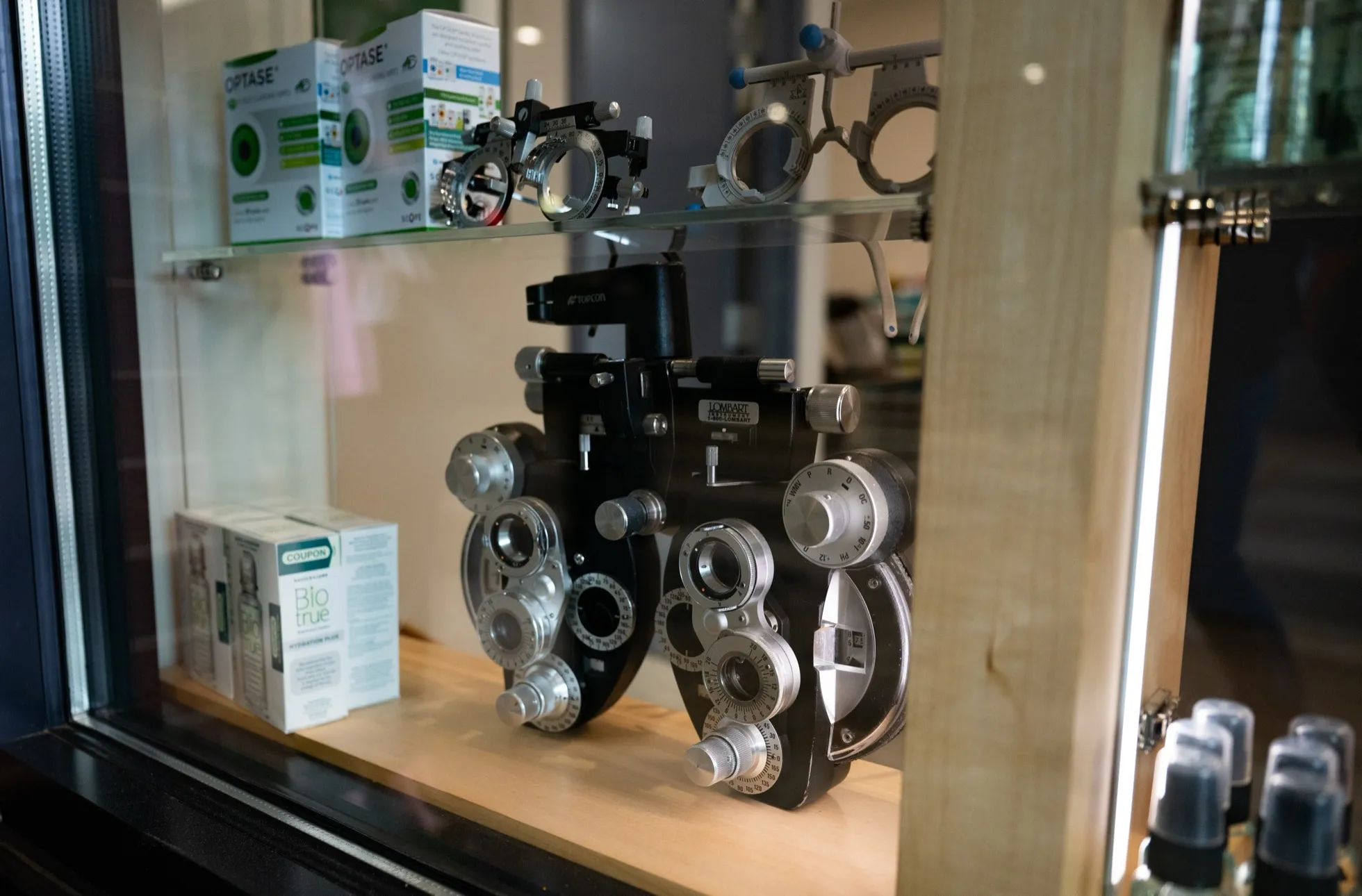
Three things vision insurance controls
Vision plans aren’t medical insurance. They’re discount programs negotiated between insurers and the largest optical chains. The plan shapes your visit in three ways most patients never realize are happening.
- Exam length. Reimbursement rates assume about fifteen minutes of doctor time. A practice that accepts the plan has to run on that economics or lose money, so the protocol gets compressed and a technician handles most of the work.
- Which tests count. Some screenings are “covered,” others are “non-covered” and need a separate fee or a separate visit. Glaucoma imaging and dilated retinal photography often fall into the second group.
- Which frames you can choose. Plan formularies usually include the chain’s house brands plus a short list of approved designer frames. Step outside the formulary and the plan contributes nothing.
What we get to do instead
Working outside that model, the exam takes as long as your eyes need, not as long as a billing code allows. The doctor orders whatever the case calls for, with no second tier of “non-covered” tests waiting behind a separate fee, and when it’s time for frames the whole case is open to you. Your eyes set the agenda, not your plan.
The math, in short
Most vision plans reimburse $100 to $200 for an annual exam after a copay. Once you account for deductibles and any “non-covered” tests, the net out-of-pocket usually lands within ten to twenty percent of what the same patient pays at Voorthuis using FSA or HSA. That fee covers a full exam with the complete screening protocol included.
We provide an itemized invoice suitable for out-of-network reimbursement if your plan offers it. The full DC cost breakdown is here.
What patients tell us
The pattern, after enough years, is consistent. Patients try us because someone they trust recommended us.
They walk out of the first exam surprised, not because the exam was unusual but because no one had ever spent that much time on their eyes. They tell us they didn’t realize what they’d been missing. Many stay for decades.
If you’ve been on a plan a long time
We get this question often: “but I’ve always just used my insurance.” Fair.
The thing worth checking is what the plan actually buys you. Pull your last few EOBs and read the line items. Many patients find their plan has been reimbursing about as much as their copay, which means there isn’t much to give up.
If you’d rather just talk to a person
Call any Voorthuis location. Tell the person what your current plan is and what you’d be shopping for, and we’ll walk you through what an exam would cost and how the FSA or HSA math works. It takes about four minutes.
Questions? Give us a call.
If anything in this article raised a question about your own eyes, give us a call. If we can't help over the phone, we can schedule you for an appointment.
Find your Voorthuis.
Call for an appointment.
Washington, DC 20016
Washington, DC 20036
Alexandria, VA 22314
Bethesda, MD 20814
Bethesda, MD 20817
Chevy Chase, MD 20815
Bethesda, MD 20816