How often should you get an eye exam?
A guide for every age, with the reasoning behind each interval.
In its 2023 guideline, the American Optometric Association moved toward recommending an annual comprehensive eye exam for most adults. Here's the breakdown by age, and the reasoning, which matters more than the calendar.
Children, age 6-17: annually
Vision changes faster during the school years than at almost any other point in life. Hidden problems show up as inattention, slow reading, or behavior issues, long before a child says they can’t see. A school screening catches a fraction of what a comprehensive exam does.
Annual is the right pace through the school years.
Adults, 18-39: now recommended annually
For years the common advice was an exam every two years for younger adults. That changed: in its 2023 clinical guideline, the American Optometric Association moved to recommending an annual comprehensive exam for adults. It’s a more proactive way to catch eye and whole-body conditions early.
Even with no symptoms, an annual baseline tracks subtle change and flags the eye-health issues that start silently. This is even more important if you have a family history of eye disease, or notice new screen-related strain, headaches, or trouble driving at night.
Adults, 40-64: annually
Presbyopia (the gradual loss of the lens’s ability to focus up close) begins in the early forties. The same window is when risk for glaucoma, cataracts, and macular degeneration starts to climb. An annual exam tracks those changes year over year and keeps your prescription current with your eyes.
Seniors, 65 and up: still annually
Risk for age-related conditions rises, and medications can affect vision and eye pressure. Annual is the floor; some patients with diagnosed conditions come in every six months for a closer check.
Special cases that shorten the interval
- Contact lens wearers, all ages. Annual at minimum. Lens fit and corneal health need yearly checks, and the fitting differs from glasses.
- Diabetes, any age. Annual or as directed. Early detection prevents more than 90% of diabetes-related vision loss, yet most people with diabetes skip the yearly exam. It’s one of the most useful things an eye exam can catch.
- Family history of glaucoma or macular degeneration. Earlier, more frequent baselines, especially after 40.
- High prescription, recent surgery, or new symptoms. Don’t wait for the regular interval, just call.
What an exam actually checks
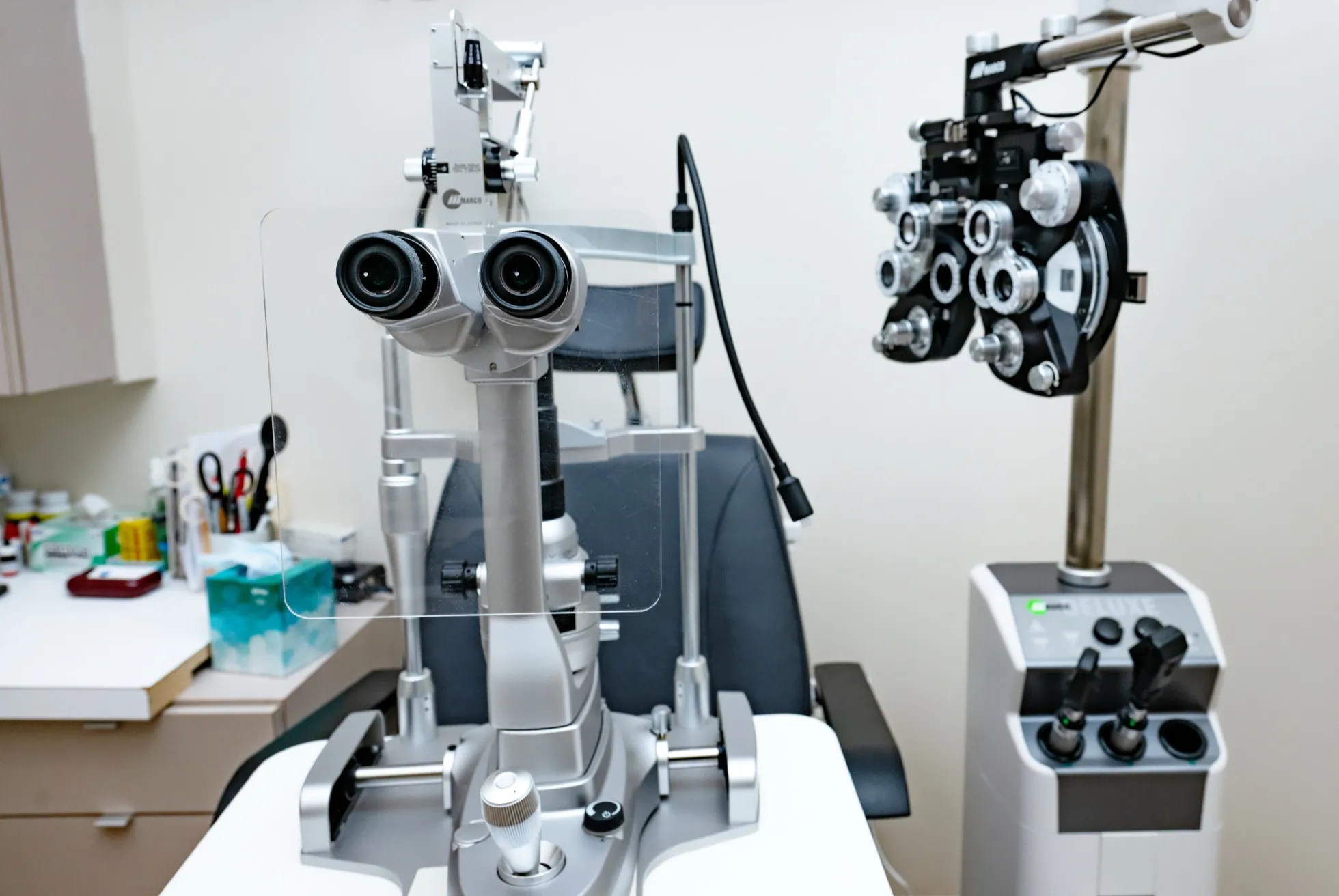
A comprehensive exam is far more than a vision screening. It includes refraction, an eye-pressure reading, an eye-health check of the retina and optic nerve, and a peripheral-vision test. It also screens for whole-body conditions that surface in the eye before they show up anywhere else.
Questions? Give us a call.
If anything in this article raised a question about your own eyes, give us a call. If we can't help over the phone, we can schedule you for an appointment.
Find your Voorthuis.
Call for an appointment.
Washington, DC 20016
Washington, DC 20036
Alexandria, VA 22314
Bethesda, MD 20814
Bethesda, MD 20817
Chevy Chase, MD 20815
Bethesda, MD 20816